

Hybrid work has revolutionised where we work: from the office, home, and coffee shops, to Slack and AI platforms. Interestingly though, it has barely changed when we work. Even in roles where output matters more than specific hours, 9-5 is still the norm.
But in a world with increasing globalisation and a 24/7 economy, fixed hours no longer reflect how business actually happens or define true productivity. Those of us who work across borders (a steadily growing group) or combine their job with a caregiver role know this reality all too well. A meeting with Australia at 5 a.m., followed by a call with the US at 9 p.m., can turn a ‘flexible’ job into an exhausting marathon. Parents, caregivers, and anyone managing complex lives feel this squeeze even more sharply.
This pressure has sparked a ‘shift’ in how we think about time with the introduction of microshifting. And it may be the most meaningful evolution for the future of hybrid work.
What is microshifting?
According to Owl Labs, microshifting is “structured flexibility with short, non-linear work blocks matched to energy, duties, or productivity.” It’s the next step in the evolution of hybrid work where employees have freedom of time, not just freedom of location. And the appetite is enormous. Owl Labs’ research shows 65% of workers are already microshifting, with parents and caregivers being three times more likely to practice this approach. The motivation? Reclaiming control in a fast-paced world.
Microshifting: Control or surrender?
And this is where things get complicated.
As a passionate microshifter myself, I’ve relied on it more out of survival than empowerment. My workday spans numerous global time zones. My partner works abroad. My four-year-old wakes up at 6 a.m. sharp. Microshifting is how I make a modern life…work.
Meetings with the New Zealand team before sunrise? Yes.
Alignment calls with our US-based HQ after I put my son to bed? Also yes.
This is where the paradox comes in: Microshifting helps prevent employee burnout at work by giving us ways to cope with the post-pandemic rat race, but if we aren’t careful, it can actually reinforce the very pace we’re trying to escape.
3 steps to make microshifting work for you
1. Identify your periods of highest productivity
I love a good 5 a.m. mailbox clearance session – it is a time of day for me where I am focused and energised. But by the time 8 p.m. hits, I struggle to compose a logical sentence.
No one is equally productive across all hours and to make microshifting truly work, you need to trust your intuition and find the hours that work best for you. Ask yourself questions such as:
- When am I most focused?
- When am I most creative?
- When do I feel least distracted?
- Your answers become the backbone of a sustainable microshifting routine.
2. Align with your team to protect connection
If everyone purely works their own ‘flow state hours,’ collaboration can fracture – especially in international teams. Microshifting works best when the team co-creates shared collaboration windows. Teams need to find a pattern that works for all while simultaneously creating a norm that removes an ‘always on’ expectation.
In global settings, I’ve found that one slightly longer weekly alignment session often works better than daily standups. It reduces the frequency of inconvenient time slots and gives everyone predictability and breathing room.
3. Use your ‘time wins’ to recharge, not to do more
Microshifting is meant to create space, not to increase capacity for more work or more household tasks. And while it’s tempting to fill your ‘empty’ slots by checking off one more to-do item or getting through that email backlog, we all need to safeguard our time. So, instead of filling every gap, protect it by:
- Going for a walk
- Reading a book
- Doing a quick workout
- Simply sitting in silence to clear your mind
In a world that glorifies being busy, break the cycle by working more intentionally, leaving room for these types of activities to refresh and recharge.
Is microshifting the future of hybrid work?
While it might be born out of necessity, I do believe that microshifting is the future of hybrid work. It gives us room to keep all those proverbial balls in the air: work, family, sports, doctor’s appointments, relationships, mental health. And when done intentionally, microshifting can improve both your personal and workplace well-being when you follow a few standard practices:
- Work when most productive: Whether at dawn before the kids wake up or late at night when the house goes quiet, maximise your time working at a schedule and pace that makes the most sense for your life.
- Rest when you best recharge: From the wuxui-inspired midday nap (that has proven to have significant health benefits) to committing to no evening emails, prioritise rest just as much as that next deliverable.
- Be with your children when they need you: A medical emergency, a sporting event, or a big concert at school, microshifting creates space for being there when it matters most.
- Handle errands without guilt: Sometimes a Friday afternoon haircut is the difference between coping and collapsing. This sort of hybrid schedule is to ensure work is still accomplished while simultaneously allowing for the flexibility to work around appointments, grocery store runs, school pick-ups, or any curveballs that get thrown at you.
Without boundaries, microshifting can easily drift into ‘micro‑availability,’ which in turn slowly erases downtime and pushes us toward perpetual responsiveness. Addressing this from the very beginning will ensure this type of hybrid schedule is empowering, not overwhelming.
Taking control of our schedule
Microshifting is more than a trend – it’s a turning point. The future of hybrid work isn’t about where we work, but about when. We now have the opportunity to design our days around energy, purpose, and well-being.
Work and see our kids grow up.
Go to the gym and hit those tight deadlines.
Rest and ace that client meeting.
But if we don’t shape microshifting with intention and boundaries, it will start to shape us and can lead to a society where ‘always available’ becomes the norm. If we do deploy it effectively, however, we can unlock a new era of work defined by freedom, rest, and the true definition of work-life balance.
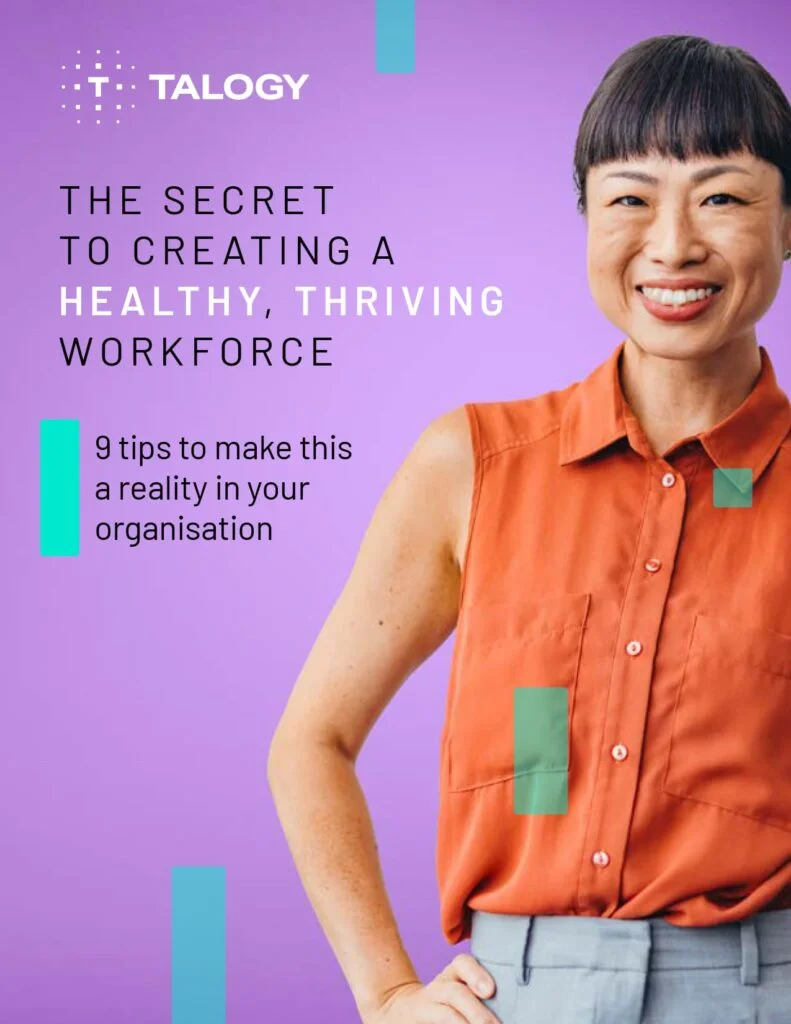
The secret to a healthy, thriving workforce
9 tips to make this a reality in your organisation
A thriving workforce doesn’t happen by chance – it’s built by leaders who prioritise transparency, empathy, and development at every level. Our research shows that effective leadership can directly impact workplace metrics like employee engagement, job satisfaction, and the financial performance of the organisation. When leadership fosters a culture of wellbeing, employees feel valued, motivated, and engaged.
Our latest guide explores how organisations can create healthier, thriving teams by discussing:
- What employees need from leaders in order to succeed
- The importance of organisational transparency
- Tips for building a stronger workforce
Let us help you get started, get back on track, or continue in your journey toward achieving a healthy, thriving workforce.