

Have you ever not had employee benefits before moving to a job that did? Do you remember the relief you felt when you finally had health insurance? Or the excitement when you could finally take a paid day off? What about the security you felt that the company offered an Employee Assistance Program (EAP) to help you get the support you needed for things outside of work? Perhaps you were offered parental leave for the first time, allowing you the time to connect with your little one. If you were really lucky maybe you found a job that offered childcare as well.
These examples of employee benefits go beyond the traditional health, vision, and dental insurance. While those remain incredibly important along with short and long-term disability benefits, life insurance, and retirement savings, when looking to attract and retain top talent, there are other benefits worth consideration to provide such as:
- Gym memberships
- Wellness programs
- Relocation expense coverage
- Company equipment
- Education or student loan assistance
- Workers’ compensation
- Remote work and flexible schedules
- Generous paid time off
Why are employee benefits important to employees?
Okay, so we know what they are, but the bigger question is what value do employee benefits bring? The simple answer is that they add to the quality of life for employees while simultaneously providing advantages to the organization like increased employee satisfaction. Here are a few examples of when both employees and employers can benefit from well-designed employee benefit programs:
Quality of life and stress reduction
Employee benefits are a key component toward improving work-life balance. This is accomplished through offering and encouraging use of paid holidays, vacation time, parental leave, sick time, etc. – essentially allowing employees to take time for themselves or their families and not strictly having to focus on their job. Being able to call off when sick and not worrying about whether the resulting paycheck will cover all the bills is something that many of us take for granted. This peace of mind cannot necessarily be quantified but makes all the difference to the employees these benefits are designed to support.
Increased job performance and productivity
I’m in no way implying that offering employee benefits equates to a stress-free workforce, but it is an act of good faith that you are working to provide for your employees in more ways than just a laptop and an employee ID. Knowing you are saving money for retirement or that you have insurance to help cover medical expenses can be a major load off their minds and allow for more energy to devote to their job tasks. In turn, this increases productivity, efficiency, and job performance across the organization.
Employee satisfaction and retention
Along the same lines, employee benefits contribute to job satisfaction. Don’t overlook the importance that employees place on development or training programs, recognition schemes, and career growth opportunities. Flexibility has also become a dealbreaker for many caregivers in particular as they juggle competing home and work priorities. Having these initiatives in place shows that you’re committed to them as humans and will go a long way in employees feeling fulfilled in their work and committed to the organization.
That being said, last year only 61% of employees reported being satisfied with their existing benefits. While they may not initially be willing to leave their job over it, decreased satisfaction can be the start of reduced productivity, job satisfaction, retention, and a lack of engagement. And while providing benefits comes with a cost, so does turnover when your workforce finds more preferable employee benefits elsewhere.
Talent attraction
Finally, and this one is for the managers, business owners, People Operation folks, or decision makers: don’t you want your employees to feel supported in a real, tangible way? And aren’t you always trying to attract good talent to your organization? Assuming the answers are yes, you should be paying close attention to what appeals most to them. When designed with intention, a well-rounded employee benefits can be a key differentiator in your talent acquisition strategy.
Make employee benefits work for you
The bottom line is employee benefits matter because they create a sense of security beyond the salary alone. Employees want to be taken care of in return for the work they are providing. Consider the full suite of benefits currently being offered to employees and see if it meets the needs of your diverse workforce. The more comprehensive the compensation package, the more attractive it will be to current and prospective employees.
When creating these packages, consider the components most likely to provide employees with a good work-life balance. Will these options allow them to give their all to both their jobs and their families? Don’t miss this key opportunity to demonstrate how committed you are as an organization to the employees who keep the business moving forward.
May your workforce be engaged, your attrition low, and your employee benefits ever in your favor!
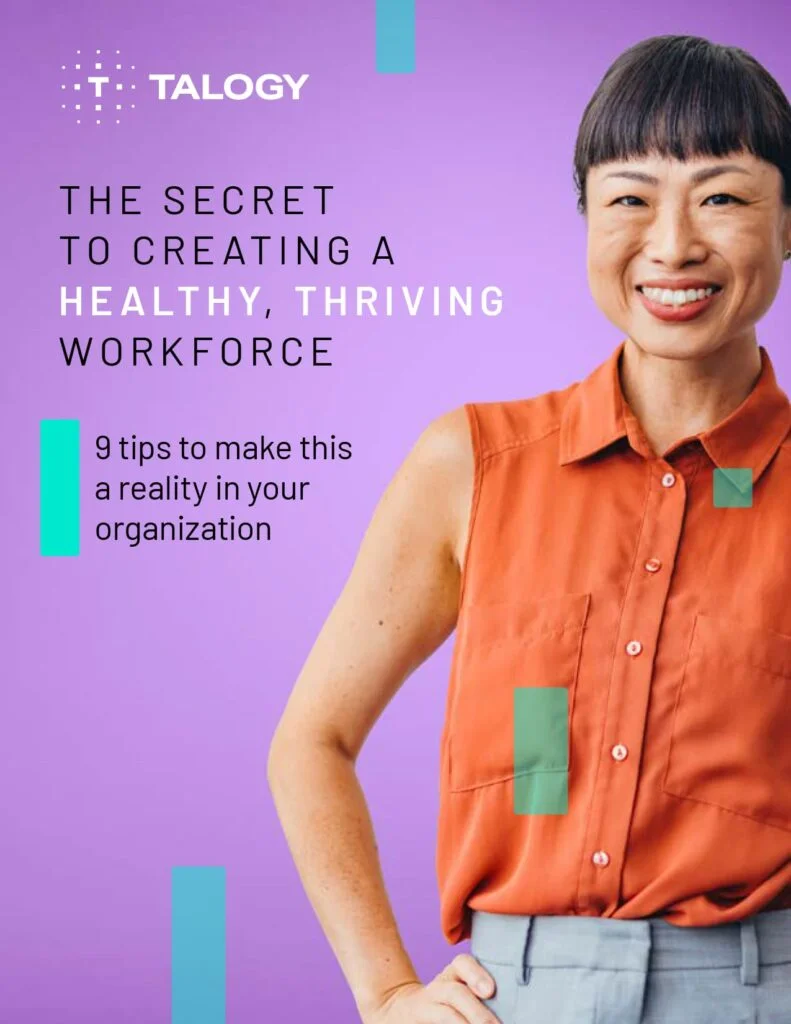
The secret to a healthy, thriving workforce
9 tips to make this a reality in your organization
A thriving workforce doesn’t happen by chance – it’s built by leaders who prioritize transparency, empathy, and development at every level. Our research shows that effective leadership can directly impact workplace metrics like employee engagement, job satisfaction, and the financial performance of the organization. When leadership fosters a culture of well-being, employees feel valued, motivated, and engaged.
Our latest guide explores how organizations can create healthier, thriving teams by discussing:
- What employees need from leaders in order to succeed
- The importance of organizational transparency
- Tips for building a stronger workforce
Let us help you get started, get back on track, or continue in your journey toward achieving a healthy, thriving workforce.